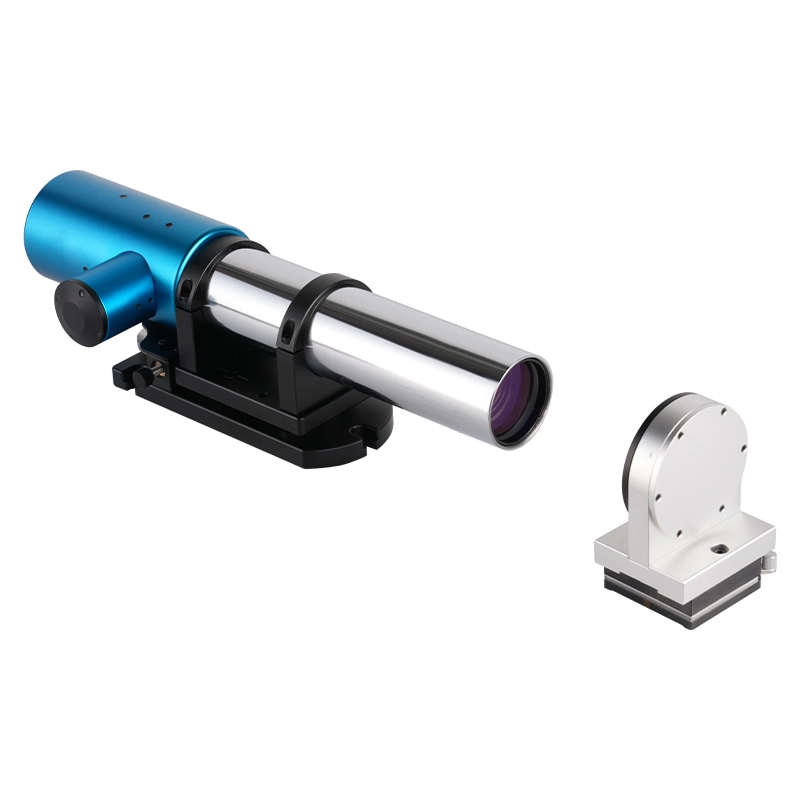
Animated explanation
- Establish the geometry
- See how one reading forms
- Change a condition and observe
- Return to the formula and its limits
The animation explains relationships and directions. Read numbers from the formula, the standard and your records.
Field of view: the real limit of range
The measuring range of an autocollimator is not what the display can show but the largest mirror tilt that keeps the return image inside the field. Electronic instruments commonly offer ±600″ or ±1000″ fields; beyond half the field the image is lost.
Wide-field series trade focal length for fields above ±1500″; with the same detector resolution drops. That is why wide field and highest accuracy are hard to combine.
Aperture and return light: why distance is limited
The returning beam spreads with distance (diffraction and setup tilt both enlarge the spot). A larger objective aperture collects more energy and allows longer range; a 60 mm aperture with a 300 mm focal length is a common 10–30 m combination.
Air turbulence makes the spot jitter, which at long distance equals a weaker signal. That is physics, not a fault: use a larger aperture or shorten the measuring distance.
Selection checklist: state the three parameters in one sentence
A useful brief to support is: "maximum angle about ±X″, distance Y m, target resolution Z″". These three numbers map directly to field, aperture-range combination and focal length, and lead to the right model faster than asking only "what accuracy".
If both directions (pitch + roll) must be measured simultaneously, state dual-axis; for dynamic line measurement, state the sampling rate.
Related methods and industries
Recommended instruments
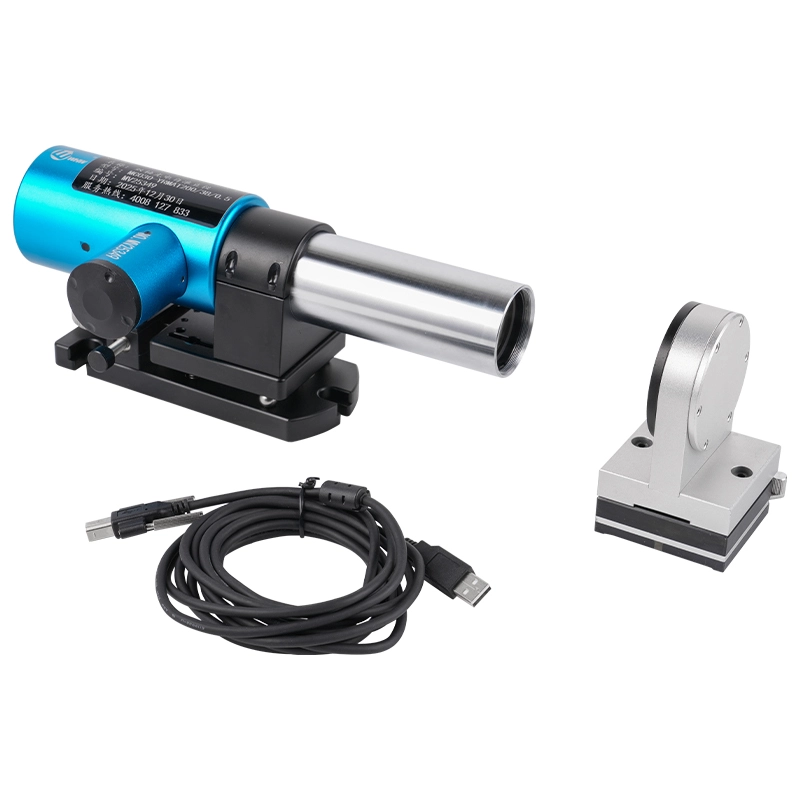
Dual-axis electronic autocollimator accuracy 1″ maximum measuring distance 10m
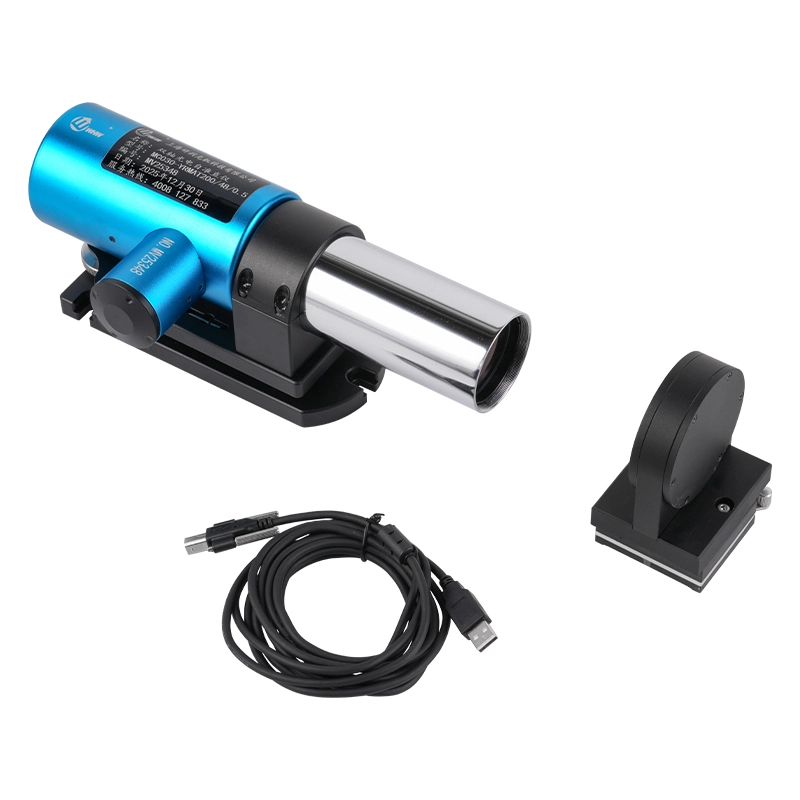
Dual-axis electronic autocollimator accuracy 1″ maximum measuring distance 20m