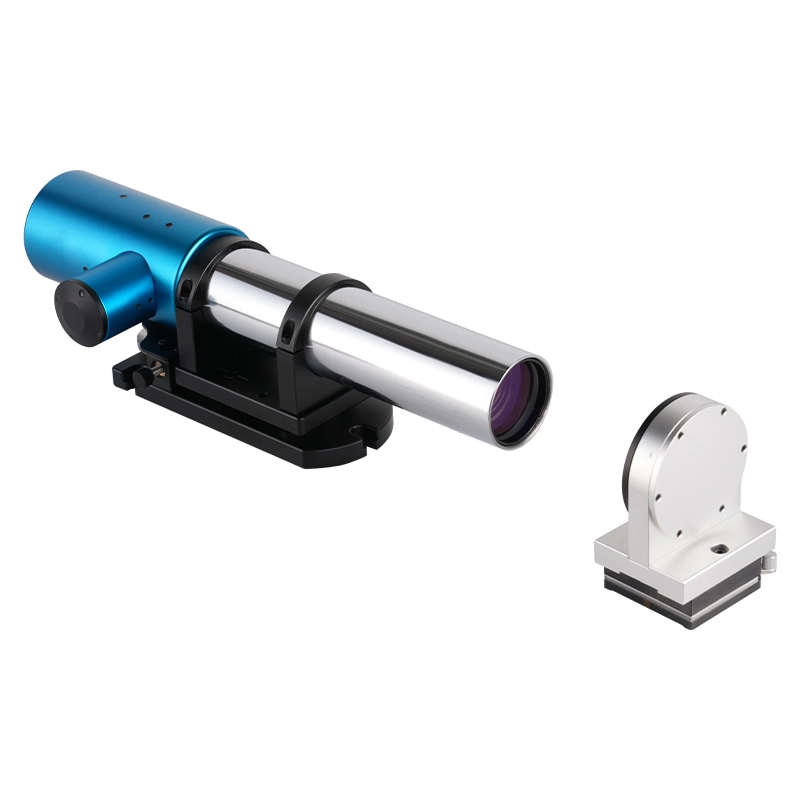
Animated explanation
- Establish the geometry
- See how one reading forms
- Change a condition and observe
- Return to the formula and its limits
The animation explains relationships and directions. Read numbers from the formula, the standard and your records.
Two directions in one reading
Pitch and roll of a guideway, or tilt and yaw of a stage, often have to be captured in one setup. Dual-axis measurement avoids re-establishing the optical path for the second direction.
For moving parts, simultaneous readings also guarantee that both directions refer to the same position, which reduces misalignment caused by time-varying effects.
Field of view sets the measurable angular range
Field of view follows from the objective focal length and the active detector size. A configuration may cover ±1000″ at short distance and only ±600″ at long distance because a different focal length is used.
Once the angle exceeds the field of view, the image leaves the detector and the reading becomes invalid without an automatic warning. Large angles belong to indexing tables, polygons or rotary stages.
The role of targets and crosshairs
A crosshair or a dedicated target on the reflector helps confirm that the image sits near the centre of the field and that the spot is neither vignetted nor starved of light.
At long working distances the spot grows noticeably. Target size and effective mirror aperture must then match the spot, otherwise weak return light makes readings jump.
Related methods and industries
Recommended instruments
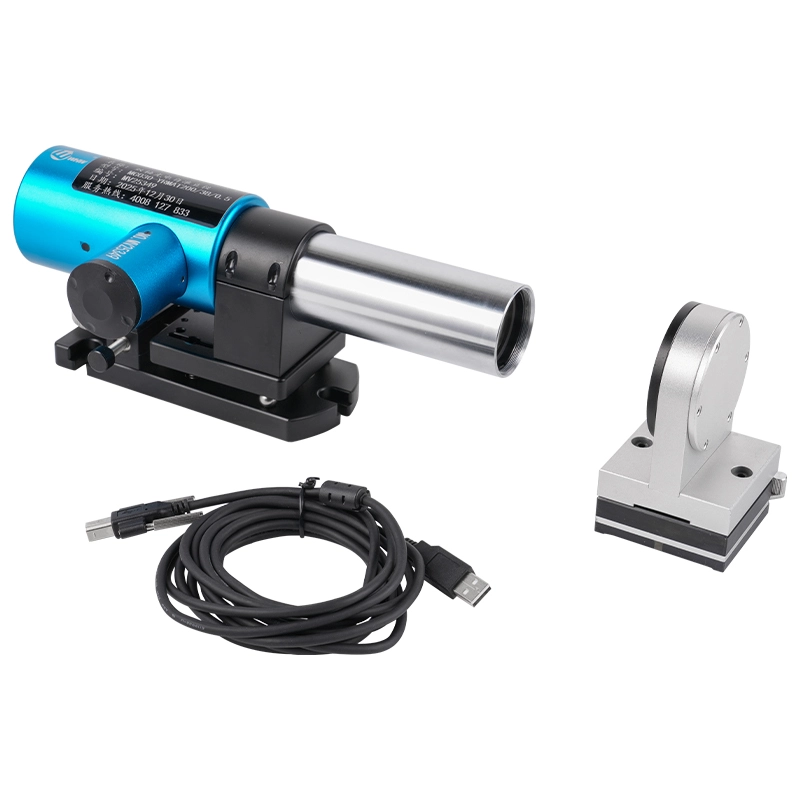
Dual-axis electronic autocollimator accuracy 1″ maximum measuring distance 10m
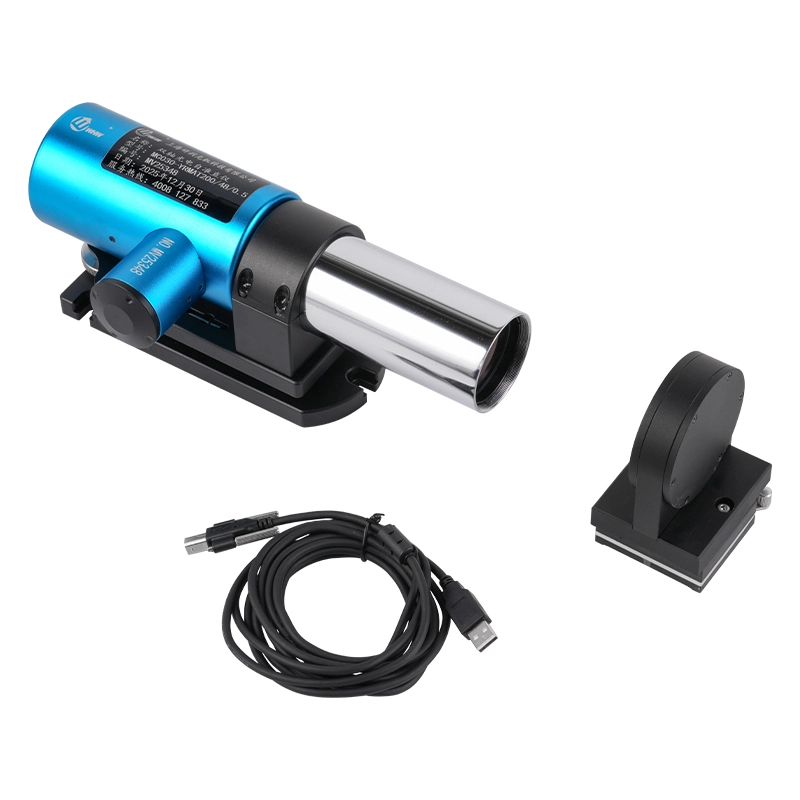
Dual-axis electronic autocollimator accuracy 1″ maximum measuring distance 20m