Animated explanation
- Establish the geometry
- See how one reading forms
- Change a condition and observe
- Return to the formula and its limits
The animation explains relationships and directions. Read numbers from the formula, the standard and your records.
Why the factor of two
A mirror tilt of α deflects the return beam by 2α. Figure deviation acts as an equivalent local slope and therefore also enters doubled.
With a 50 mm aperture and 0.05 μm local deviation: δθ ≈ 2×0.05 μm / 50 mm ≈ 0.41″ — already near the resolution of a general-purpose autocollimator.
A larger aperture averages better but returns less light
Figure error averages over the aperture. Bigger mirrors suppress local slope but return less light at the same distance, raising noise on long paths.
Practical designs trade averaging against return intensity.
How to accept a measurement mirror
Ask for PV and RMS figure, clear aperture and coating, then convert to angular effect over that aperture.
In the field, rotate the mirror by 90° and repeat: a reading that follows the rotation indicates figure or mounting effects.
Related methods and industries
Recommended instruments
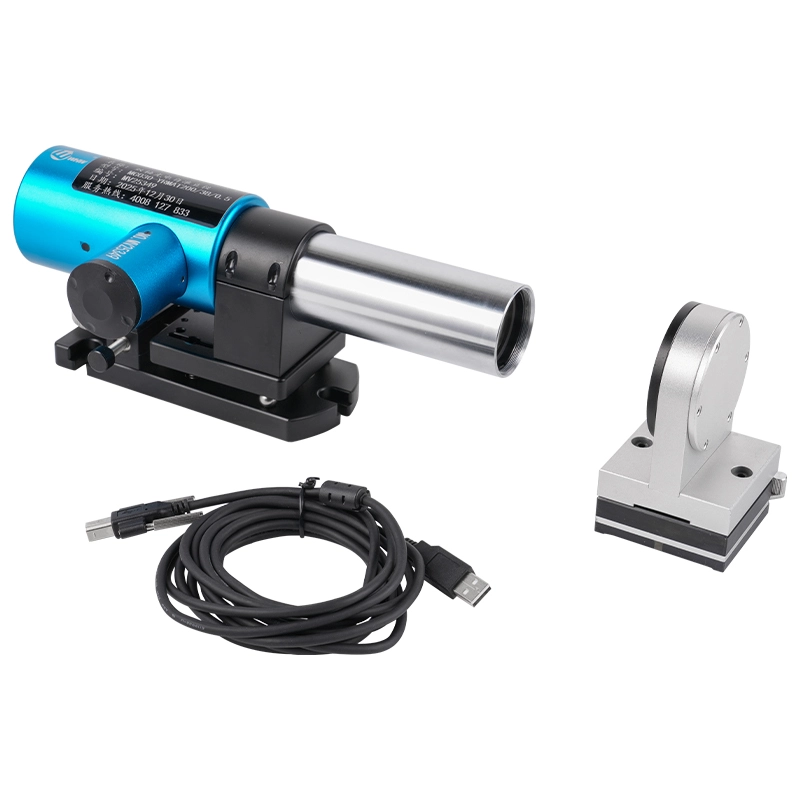
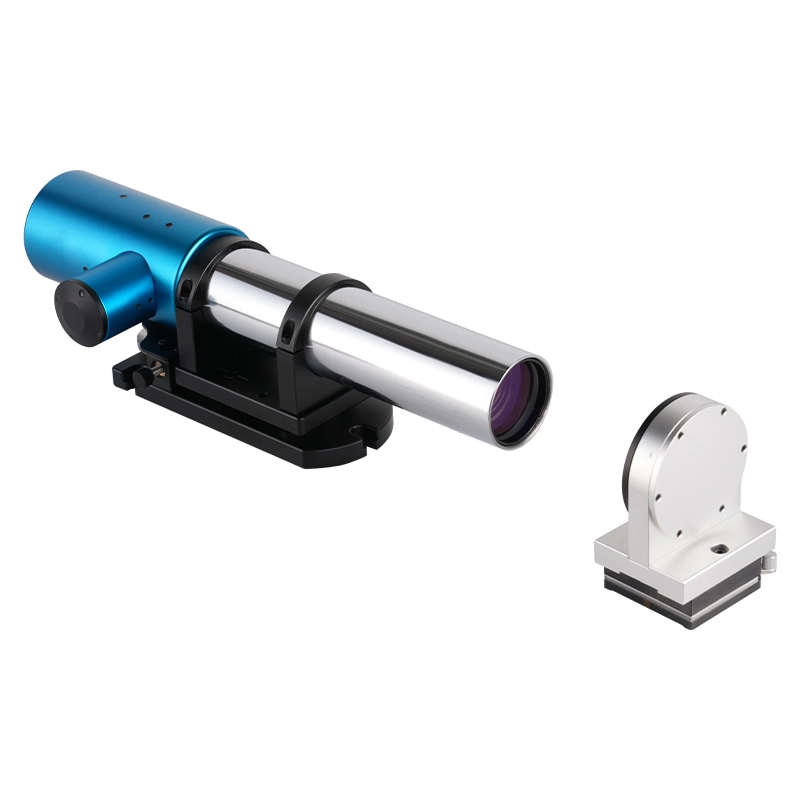
Dual-axis electronic autocollimator accuracy 1″ maximum measuring distance 10m
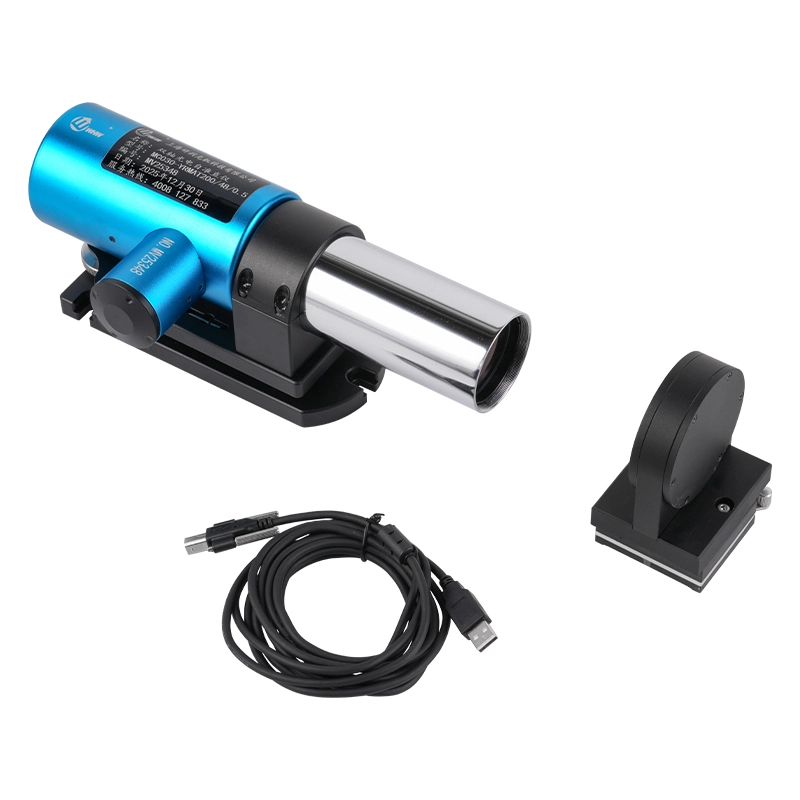
Dual-axis electronic autocollimator accuracy 1″ maximum measuring distance 20m